New report highlights priorities for a connected rare disease data and digital future
The LifeArc Centre for Acceleration of Rare Disease Trials (ARDT) is pleased to share the publication of a new report led by Prof. Amy Jane McKnight from our Implementing Innovation in the NHS Work Package (WP5). The report from the Making Connections Count workshop brings together perspectives from across the UK rare disease community to explore how data, registries and digital infrastructure can better support research, clinical care and improved outcomes for people living with rare conditions.
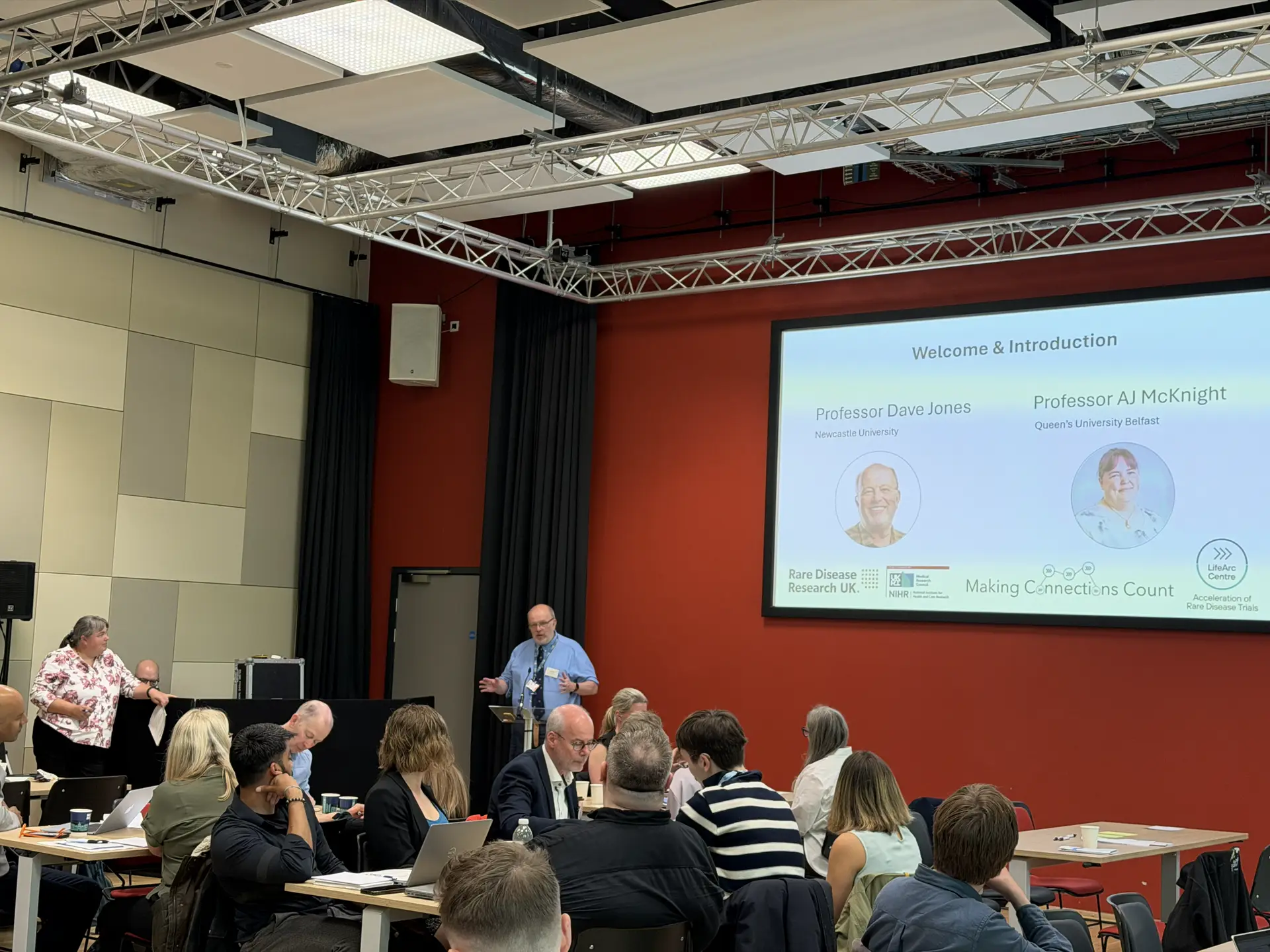
Experts from across the UK rare disease community came together in Newcastle in June 2026 for the Making Connections Count workshop, co-organised by the LifeArc Centre for Acceleration of Rare Disease Trials and Rare Disease Research UK. The event brought together researchers, clinicians, data scientists, policymakers, industry representatives and people affected by rare diseases to explore how data and digital innovation can be used to improve diagnosis, research, care and access to treatments.
Connecting the UK’s rare disease data
A clear message emerged: the UK already possesses many of the building blocks needed to transform rare disease research and care, but greater connectivity between data systems is urgently required. Participants highlighted how fragmented data, inconsistent coding, limited interoperability and barriers to data-sharing continue to hinder progress for the more than four million people living with rare diseases across the UK.
The workshop showcased examples of innovation from all four nations, including national rare disease registries, genomics initiatives, population health resources and disease-specific programmes. These demonstrated the power of linked, high-quality data to support earlier diagnoses, accelerate clinical trial recruitment, generate real-world evidence and improve outcomes for patients and families.
Investing in people as well as technology
Among the key recommendations was a call for sustained investment in national rare disease registration systems, adoption of harmonised coding standards, improved UK-wide data sharing, and development of a common minimum dataset for rare diseases. Participants also emphasised the importance of capturing patient-reported outcomes and ensuring patients remain active partners in the design, governance and use of rare disease data resources.
The report concludes that rare disease communities continue to be pioneers of data-driven innovation. By connecting existing infrastructures, investing in sustainable data systems and enabling secure access to high-quality longitudinal data, the UK has an opportunity to become a global leader in rare disease research, clinical trials and precision healthcare. The full report Making Connections Count Report, is available via
Making connections count